Clear Line Prints · Shop on Zazzle · Shop on TeePublic · Shop on Threadless · Pinterest · YouTube
Home › Chart guides › Beef Cuts Chart
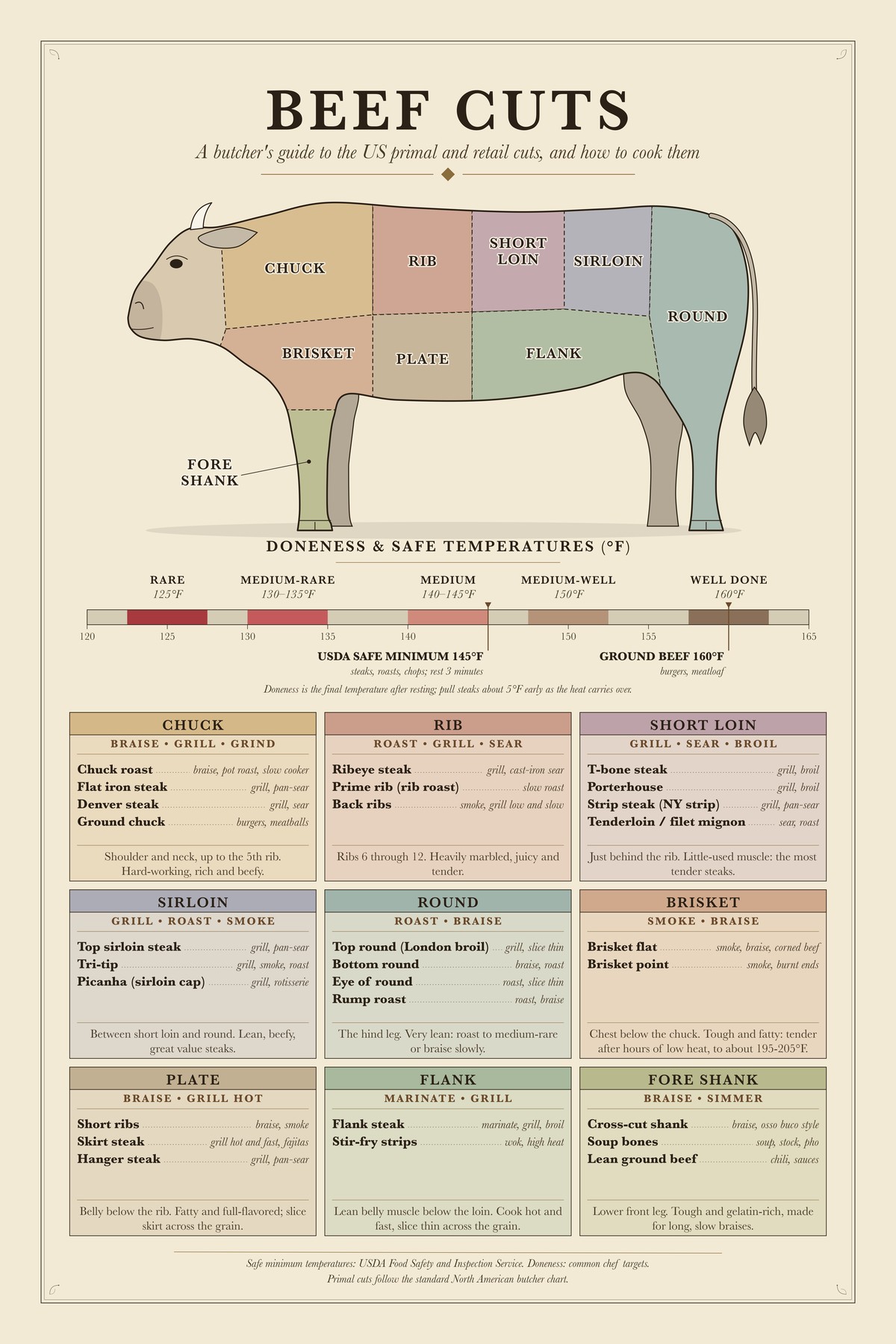
A steer is divided into nine US primal cuts, from the chuck at the shoulder to the round at the hind leg. Each primal is listed below with the retail cuts that come from it and the best ways to cook them, together with steak doneness temperatures and the USDA safe minimums.
This chart is printed as a poster and art print by our print partners, who make and ship each order. See the poster page.
Buy on TeePublicBuy on ZazzleBuy on Threadless (art print, framed, canvas)
A butcher's guide to the US primal and retail cuts, and how to cook them.
| Temperature | |
|---|---|
| Rare | 125°F |
| Medium-Rare | 130–135°F |
| Medium | 140–145°F |
| Medium-Well | 150°F |
| Well Done | 160°F |
| Usda Safe Minimum 145°F | steaks, roasts, chops; rest 3 minutes |
| Ground Beef 160°F | burgers, meatloaf |
Doneness is the final temperature after resting; pull steaks about 5°F early as the heat carries over.
| Cut | How to cook it |
|---|---|
| Chuck roast | braise, pot roast, slow cooker |
| Flat iron steak | grill, pan-sear |
| Denver steak | grill, sear |
| Ground chuck | burgers, meatballs |
Shoulder and neck, up to the 5th rib. Hard-working, rich and beefy.
| Cut | How to cook it |
|---|---|
| Ribeye steak | grill, cast-iron sear |
| Prime rib (rib roast) | slow roast |
| Back ribs | smoke, grill low and slow |
Ribs 6 through 12. Heavily marbled, juicy and tender.
| Cut | How to cook it |
|---|---|
| T-bone steak | grill, broil |
| Porterhouse | grill, broil |
| Strip steak (NY strip) | grill, pan-sear |
| Tenderloin / filet mignon | sear, roast |
Just behind the rib. Little-used muscle: the most tender steaks.
| Cut | How to cook it |
|---|---|
| Top sirloin steak | grill, pan-sear |
| Tri-tip | grill, smoke, roast |
| Picanha (sirloin cap) | grill, rotisserie |
Between short loin and round. Lean, beefy, great value steaks.
| Cut | How to cook it |
|---|---|
| Top round (London broil) | grill, slice thin |
| Bottom round | braise, roast |
| Eye of round | roast, slice thin |
| Rump roast | roast, braise |
The hind leg. Very lean: roast to medium-rare or braise slowly.
| Cut | How to cook it |
|---|---|
| Brisket flat | smoke, braise, corned beef |
| Brisket point | smoke, burnt ends |
Chest below the chuck. Tough and fatty: tender after hours of low heat, to about 195-205°F.
| Cut | How to cook it |
|---|---|
| Short ribs | braise, smoke |
| Skirt steak | grill hot and fast, fajitas |
| Hanger steak | grill, pan-sear |
Belly below the rib. Fatty and full-flavored; slice skirt across the grain.
| Cut | How to cook it |
|---|---|
| Flank steak | marinate, grill, broil |
| Stir-fry strips | wok, high heat |
Lean belly muscle below the loin. Cook hot and fast, slice thin across the grain.
| Cut | How to cook it |
|---|---|
| Cross-cut shank | braise, osso buco style |
| Soup bones | soup, stock, pho |
| Lean ground beef | chili, sauces |
Lower front leg. Tough and gelatin-rich, made for long, slow braises.
Safe minimum temperatures: USDA Food Safety and Inspection Service. Doneness: common chef targets.
Primal cuts follow the standard North American butcher chart.