Clear Line Prints · Shop on Zazzle · Shop on TeePublic · Shop on Threadless · Pinterest · YouTube
Home › Chart guides › Pork Cuts Chart
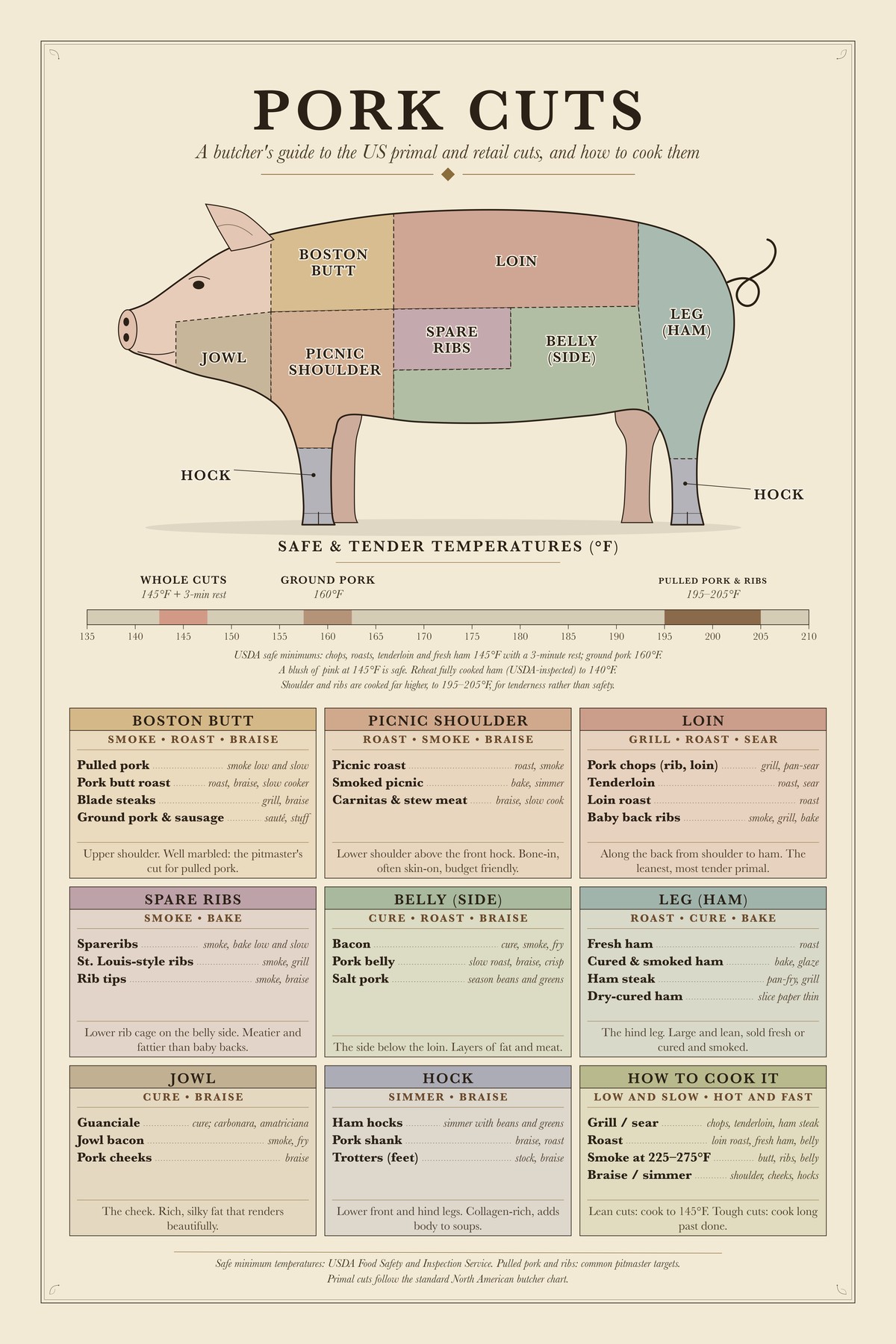
From Boston butt and loin to belly, ham, jowl and hock: this pork cuts chart lists each US primal cut, the retail cuts it gives you and how to cook them, with the USDA safe temperatures and the much higher targets pitmasters use for pulled pork and ribs.
This chart is on its way to our print shops. Our posters are listed on Zazzle, TeePublic and Threadless (links at the top of this page); browse the kitchen and classroom charts to see the ones already available.
A butcher's guide to the US primal and retail cuts, and how to cook them.
| Temperature | |
|---|---|
| Whole Cuts | 145°F + 3-min rest |
| Ground Pork | 160°F |
| Pulled Pork & Ribs | 195–205°F |
USDA safe minimums: chops, roasts, tenderloin and fresh ham 145°F with a 3-minute rest; ground pork 160°F. A blush of pink at 145°F is safe. Reheat fully cooked ham (USDA-inspected) to 140°F. Shoulder and ribs are cooked far higher, to 195–205°F, for tenderness rather than safety.
| Cut | How to cook it |
|---|---|
| Pulled pork | smoke low and slow |
| Pork butt roast | roast, braise, slow cooker |
| Blade steaks | grill, braise |
| Ground pork & sausage | sauté, stuff |
Upper shoulder. Well marbled: the pitmaster's cut for pulled pork.
| Cut | How to cook it |
|---|---|
| Picnic roast | roast, smoke |
| Smoked picnic | bake, simmer |
| Carnitas & stew meat | braise, slow cook |
Lower shoulder above the front hock. Bone-in, often skin-on, budget friendly.
| Cut | How to cook it |
|---|---|
| Pork chops (rib, loin) | grill, pan-sear |
| Tenderloin | roast, sear |
| Loin roast | roast |
| Baby back ribs | smoke, grill, bake |
Along the back from shoulder to ham. The leanest, most tender primal.
| Cut | How to cook it |
|---|---|
| Spareribs | smoke, bake low and slow |
| St. Louis-style ribs | smoke, grill |
| Rib tips | smoke, braise |
Lower rib cage on the belly side. Meatier and fattier than baby backs.
| Cut | How to cook it |
|---|---|
| Bacon | cure, smoke, fry |
| Pork belly | slow roast, braise, crisp |
| Salt pork | season beans and greens |
The side below the loin. Layers of fat and meat.
| Cut | How to cook it |
|---|---|
| Fresh ham | roast |
| Cured & smoked ham | bake, glaze |
| Ham steak | pan-fry, grill |
| Dry-cured ham | slice paper thin |
The hind leg. Large and lean, sold fresh or cured and smoked.
| Cut | How to cook it |
|---|---|
| Guanciale | cure; carbonara, amatriciana |
| Jowl bacon | smoke, fry |
| Pork cheeks | braise |
The cheek. Rich, silky fat that renders beautifully.
| Cut | How to cook it |
|---|---|
| Ham hocks | simmer with beans and greens |
| Pork shank | braise, roast |
| Trotters (feet) | stock, braise |
Lower front and hind legs. Collagen-rich, adds body to soups.
| Cut | How to cook it |
|---|---|
| Grill / sear | chops, tenderloin, ham steak |
| Roast | loin roast, fresh ham, belly |
| Smoke at 225–275°F | butt, ribs, belly |
| Braise / simmer | shoulder, cheeks, hocks |
Lean cuts: cook to 145°F. Tough cuts: cook long past done.
Safe minimum temperatures: USDA Food Safety and Inspection Service. Pulled pork and ribs: common pitmaster targets.
Primal cuts follow the standard North American butcher chart.