Clear Line Prints · Shop on Zazzle · Shop on TeePublic · Shop on Threadless · Pinterest · YouTube
Home › Chart guides › Houseplant Care Chart
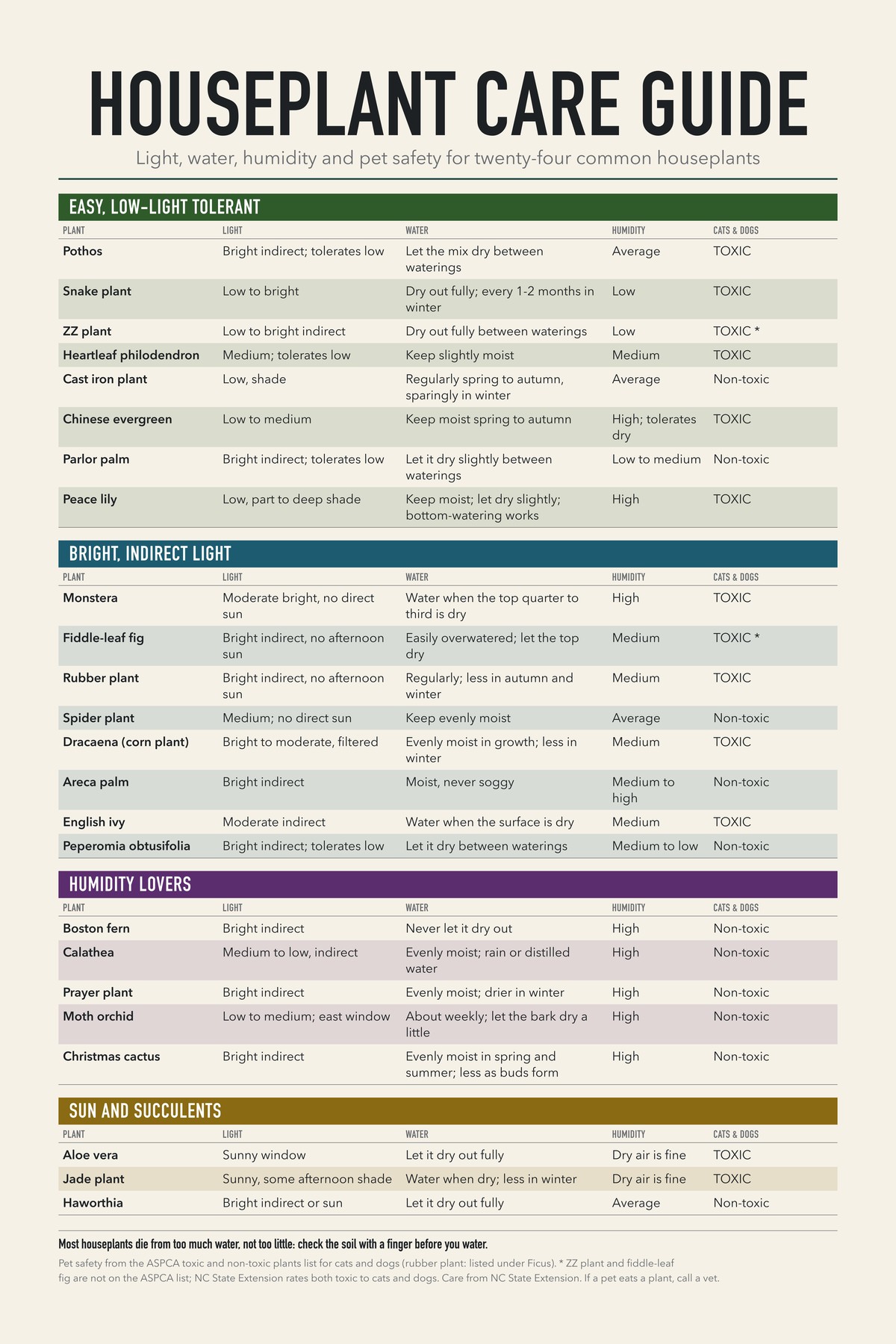
How much light and water does a pothos, monstera or fiddle-leaf fig need, and is it safe around cats and dogs? This chart covers twenty-four common houseplants, grouped from easy low-light plants to humidity lovers and succulents.
This chart is on its way to our print shops. Our posters are listed on Zazzle, TeePublic and Threadless (links at the top of this page); browse the kitchen and classroom charts to see the ones already available.
Light, water, humidity and pet safety for twenty-four common houseplants.
| Plant | Light | Water | Humidity | Cats & dogs |
|---|---|---|---|---|
| Pothos | Bright indirect; tolerates low | Let the mix dry between waterings | Average | TOXIC |
| Snake plant | Low to bright | Dry out fully; every 1-2 months in winter | Low | TOXIC |
| ZZ plant | Low to bright indirect | Dry out fully between waterings | Low | TOXIC * |
| Heartleaf philodendron | Medium; tolerates low | Keep slightly moist | Medium | TOXIC |
| Cast iron plant | Low, shade | Regularly spring to autumn, sparingly in winter | Average | Non-toxic |
| Chinese evergreen | Low to medium | Keep moist spring to autumn | High; tolerates dry | TOXIC |
| Parlor palm | Bright indirect; tolerates low | Let it dry slightly between waterings | Low to medium | Non-toxic |
| Peace lily | Low, part to deep shade | Keep moist; let dry slightly; bottom-watering works | High | TOXIC |
| Plant | Light | Water | Humidity | Cats & dogs |
|---|---|---|---|---|
| Monstera | Moderate bright, no direct sun | Water when the top quarter to third is dry | High | TOXIC |
| Fiddle-leaf fig | Bright indirect, no afternoon sun | Easily overwatered; let the top dry | Medium | TOXIC * |
| Rubber plant | Bright indirect, no afternoon sun | Regularly; less in autumn and winter | Medium | TOXIC |
| Spider plant | Medium; no direct sun | Keep evenly moist | Average | Non-toxic |
| Dracaena (corn plant) | Bright to moderate, filtered | Evenly moist in growth; less in winter | Medium | TOXIC |
| Areca palm | Bright indirect | Moist, never soggy | Medium to high | Non-toxic |
| English ivy | Moderate indirect | Water when the surface is dry | Medium | TOXIC |
| Peperomia obtusifolia | Bright indirect; tolerates low | Let it dry between waterings | Medium to low | Non-toxic |
| Plant | Light | Water | Humidity | Cats & dogs |
|---|---|---|---|---|
| Boston fern | Bright indirect | Never let it dry out | High | Non-toxic |
| Calathea | Medium to low, indirect | Evenly moist; rain or distilled water | High | Non-toxic |
| Prayer plant | Bright indirect | Evenly moist; drier in winter | High | Non-toxic |
| Moth orchid | Low to medium; east window | About weekly; let the bark dry a little | High | Non-toxic |
| Christmas cactus | Bright indirect | Evenly moist in spring and summer; less as buds form | High | Non-toxic |
| Plant | Light | Water | Humidity | Cats & dogs |
|---|---|---|---|---|
| Aloe vera | Sunny window | Let it dry out fully | Dry air is fine | TOXIC |
| Jade plant | Sunny, some afternoon shade | Water when dry; less in winter | Dry air is fine | TOXIC |
| Haworthia | Bright indirect or sun | Let it dry out fully | Average | Non-toxic |
Most houseplants die from too much water, not too little: check the soil with a finger before you water.
Pet safety from the ASPCA toxic and non-toxic plants list for cats and dogs (rubber plant: listed under Ficus). * ZZ plant and fiddle-leaf fig are not on the ASPCA list; NC State Extension rates both toxic to cats and dogs. Care from NC State Extension. If a pet eats a plant, call a vet.